
How is AI Reshaping Digital Marketing in 2026?
The cool discussions about artificial intelligence have changed dramatically since the early 2020s. Back then, AI was something marketers experimented with to generate blog post ideas or create social media captions.
In 2026, AI is no longer a tool you choose to use. It is now the infrastructure upon which successful marketing strategies are built. In Kenya and across East Africa, this shift represents both an unprecedented opportunity and a critical juncture.
The brands that recognize AI as their core operating system are scaling faster, spending less and connecting with African consumers in ways that were technologically impossible just three years ago.
From Generative AI to AI Agents
In 2023 and 2024, the buzzword was “generative AI.” Marketers became proficient at writing prompts for ChatGPT to draft emails, using Midjourney to create visuals and asking Bard (now deeply integrated into Google’s core search architecture) to summarize competitor strategies. That era was characterized by human-initiated, human-edited output. The process still required significant manual effort: a marketer would think of a task, write a detailed prompt, receive an output, edit that output and then execute it.
2026 is defined by AI Agents. This is the most critical development for any business owner or marketing professional to understand. An AI agent is not a tool you command; it is an autonomous digital worker you manage. You do not ask an AI agent to “write an email campaign.” Instead, you assign it a business objective.
For example, a marketing manager in Nairobi might log into their marketing dashboard and instruct an AI agent: “Increase reactivation rates for lapsed M-Pesa customers in the SME segment by 18% within the next 30 days, staying within a KES 150,000 budget.”
From that single instruction, the AI agent goes to work autonomously. It analyzes customer data to identify which specific behaviors indicate a lapsed user. It segments the audience into micro-cohorts based on past purchase frequency, location (differentiating between urban Nairobi, Kisumu and rural areas) and even preferred language (English, Swahili or Sheng). The agent then generates hundreds of unique creative assets video, copy, images tailored to each cohort. It sets up A/B tests across SMS, WhatsApp Business, email and social channels. It monitors performance in real-time, pauses underperforming creatives, allocates more budget to winning variants and even adjusts the offer based on competitive activity it detects in the market. At the end of the month, it delivers a comprehensive report with insights and recommendations for the next cycle. The human marketer’s role has shifted from “doer” to “strategist and supervisor,” focusing on high-level brand safety, emotional resonance and overall business alignment.
For businesses, this AI Agent shift is transformative because it solves the perennial challenge of resource constraints. A small e-commerce brand in Kenya can now leverage the equivalent of a full marketing department’s analytical and creative output for a fraction of the cost. The competitive advantage no longer belongs to the brand with the largest team; it belongs to the brand that manages its AI agents most effectively.
Dynamic Creative Optimization
Personalization has been a marketing buzzword for over a decade, but in 2026, we have moved far beyond the clumsy “Hello [First Name]” email subject line. Now personalization means that every single customer interaction is uniquely tailored to that individual in real-time, driven by AI that understands context, culture and intent.
The technology enabling this is Dynamic Creative Optimization (DCO) 3.0, which integrates generative AI with real-time customer data platforms. This means that when a potential customer in Mombasa scrolls through their Instagram feed, the ad they see for a Nairobi-based logistics company will be fundamentally different from what a user in Eldoret sees even if they clicked on the same initial link.
The AI dynamically generates the video ad, selecting different visuals (urban congestion for the Mombasa user vs. long-distance highway shots for the Eldoret user), different voiceover accents, different pricing displays (in KES with local delivery estimates) and different calls-to-action based on the user’s browsing history and predicted intent.
This level of personalization is critical, where consumer behavior varies dramatically by region, language and even infrastructure access. A consumer in Nairobi’s Westlands may have reliable fiber internet and prefer high-definition video ads. A consumer in a rural area might rely on slower mobile connections and respond better to lightweight, text-based WhatsApp messages with compressed images.
AI systems now automatically detect connection speeds, device types and user preferences to deliver the optimal asset format without any manual intervention from the marketing team. The result is higher engagement, lower bounce rates and a significant improvement in return on ad spend.
From SEO to GEO (Generative Engine Optimization)
Search engine optimization as we knew it in the early 2020s has undergone a fundamental transformation. In 2026, the majority of search queries especially those with commercial intent no longer result in a user clicking a “blue link” to visit a website.
Instead, users receive AI-generated overviews directly within the search interface. Whether users are querying Google’s Gemini, Microsoft’s Copilot or standalone AI platforms like Perplexity, the answer is synthesized from multiple sources and presented conversationally without requiring a click.
This shift has given rise to a new discipline: Generative Engine Optimization (GEO). While traditional SEO focused on keywords, backlinks and technical site structure, GEO focuses on being the authoritative source that AI models choose to cite. In 2026, ranking number one on Google’s organic results is far less valuable than being the source consistently referenced by AI-generated answers.
For businesses, this means a strategic pivot. It is no longer enough to have a technically optimized website. Brands must now focus on establishing domain authority through high-quality, locally relevant content that AI models recognize as trustworthy. Structured data markup has become more critical than ever, as it helps AI models accurately understand the context of a business’s offerings whether that’s a restaurant in Kilimani, a tour operator in Maasai Mara or a fintech startup offering micro-loans.
Another major shift is the emphasis on E-E-A-T (Experience, Expertise, Authoritativeness, Trustworthiness), which search engines and AI models use to vet sources. For businesses, this presents an opportunity to showcase authentic local expertise. Content that demonstrates deep knowledge of regional consumer behavior, local regulations and cultural nuances is increasingly favored by AI algorithms over generic, globally sourced content. Businesses that invest in creating detailed, locally grounded resources such as comprehensive guides to Nairobi real estate, Swahili-language financial literacy content or in-depth analyses of East African supply chains are seeing their visibility soar in AI-generated search results.
Moving from Dashboards to Decision Engines
For years, marketers relied on dashboards that told them what happened yesterday. They would log into Google Analytics, see that traffic dropped and then spend hours trying to diagnose the cause. In 2026, the role of analytics has shifted from descriptive (what happened) to predictive (what will happen) to prescriptive (what the business should do about it).
Modern AI-powered analytics platforms analyze vast amounts of data not just website traffic, but also customer support interactions, social media sentiment, macroeconomic indicators and even weather patterns to forecast future behavior with remarkable accuracy.
For a retail business in Nairobi, for example, the AI might predict that a specific cohort of customers is likely to churn within the next 14 days based on subtle signals: they have opened fewer emails, their average session duration on the mobile app has decreased by 30% and they have not engaged with the loyalty program despite three prompts.
The AI does not simply flag this risk; it automatically deploys a retention workflow tailored to that cohort. It might send a personalized WhatsApp message with a unique discount code tied to the customer’s past purchase history or it might trigger a call from a customer service agent if the predicted lifetime value is high enough. The entire process happens without human intervention, based on predefined business rules and AI-optimized strategies. For businesses in East Africa, where customer acquisition costs are rising, this ability to proactively retain customers is a game-changer. It shifts marketing from a reactive cost center to a predictive revenue driver.
AI-Powered Content Creation and Localization
Content marketing is no longer about producing a high volume of generic blog posts. It is about creating deeply relevant, culturally resonant content at scale across multiple formats and languages. AI has matured to the point where it can understand and generate content in Swahili, Sheng and other local languages with a level of nuance that was impossible just a few years ago.
For brands targeting the East African market, this is key. AI tools can now take a single piece of content, say, a product announcement and automatically adapt it for different audiences. It can rewrite the announcement in formal Swahili for an older, more traditional demographic in Mombasa, while generating a fast-paced, slang-infused version in Sheng for a younger audience in Nairobi’s estates. It can then transform that same core message into a 60-second video script for TikTok, a carousel post for Instagram, a detailed LinkedIn article for B2B buyers and a voice note script for WhatsApp marketing all while maintaining consistent brand voice and key messaging.
The efficiency gains are staggering. A marketing team of three people in Kenya can now produce the volume and quality of content that would have required a full agency of fifteen people a decade ago. This allows businesses to focus their human talent on high-level strategy, creative direction and quality control, rather than on the mechanical tasks of content production. The result is more authentic, locally relevant marketing that resonates with East African consumers while operating within tight budgets.
Navigating the EU AI Act and Local Data Privacy
As AI becomes more deeply embedded in marketing operations, regulatory compliance has emerged as a critical concern. In 2026, the EU AI Act is fully enforced and its influence is felt globally, including in Kenya and East Africa. The Act categorizes AI applications by risk level and many marketing AI applications particularly those involving consumer profiling, behavioral targeting and automated decision-making fall under the “high-risk” category requiring strict transparency, human oversight and robust documentation.
For businesses operating in the region, compliance means more than just avoiding fines. It is becoming a competitive differentiator. Consumers in Kenya and across East Africa are increasingly aware of how their data is used and they prefer brands that are transparent about their AI usage. Smart marketers in 2026 are implementing synthetic data strategies, where AI models are trained on artificially generated data that mirrors real customer behavior without using actual personally identifiable information. This allows for powerful personalization while minimizing privacy risks and regulatory exposure.
Another key development is the rise of AI watermarking and disclosure requirements. Many jurisdictions now require that AI-generated content especially in advertising and political messaging be clearly labeled. For marketers, this has become standard practice. It is no longer seen as a liability but as a trust-building measure. Brands that proudly disclose their use of AI and explain how it benefits the customer (e.g., “We use AI to show you products we think you’ll love, based on your preferences, not your personal data”) are seeing higher engagement and lower skepticism than those that hide their AI usage.
The Human + Machine Workflow
With AI handling so much of the execution, a natural question arises: what is the role of the human marketer in 2026? The answer is that marketing roles have evolved, not disappeared. The human marketer now functions as a strategist, editor, ethicist and brand guardian.
The technical skills most in demand have shifted from “knowing how to use tools” to prompt architecture, AI workflow management and strategic oversight. A modern marketing manager in Nairobi does not need to know how to write SQL queries to pull data, but they do need to know how to frame the right question for the AI analytics engine to generate actionable insights. They do not need to be a graphic designer, but they need to be able to evaluate dozens of AI-generated creatives and select the ones that best reflect the brand’s identity and emotional tone.
Perhaps most importantly, the human marketer is responsible for cultural and contextual sensitivity. AI, for all its power, still struggles with the nuances of humor, taboo subjects, political sensitivity and authentic cultural representation areas that are particularly important in the diverse East African market. The marketer ensures that AI-generated content does not inadvertently cause offense, miss local references or misrepresent the brand’s values. This human-in-the-loop model, where AI handles scale and speed while humans handle judgment and nuance, is the defining operational structure of successful marketing teams in 2026.
What This Means for Kenyan and East African Businesses
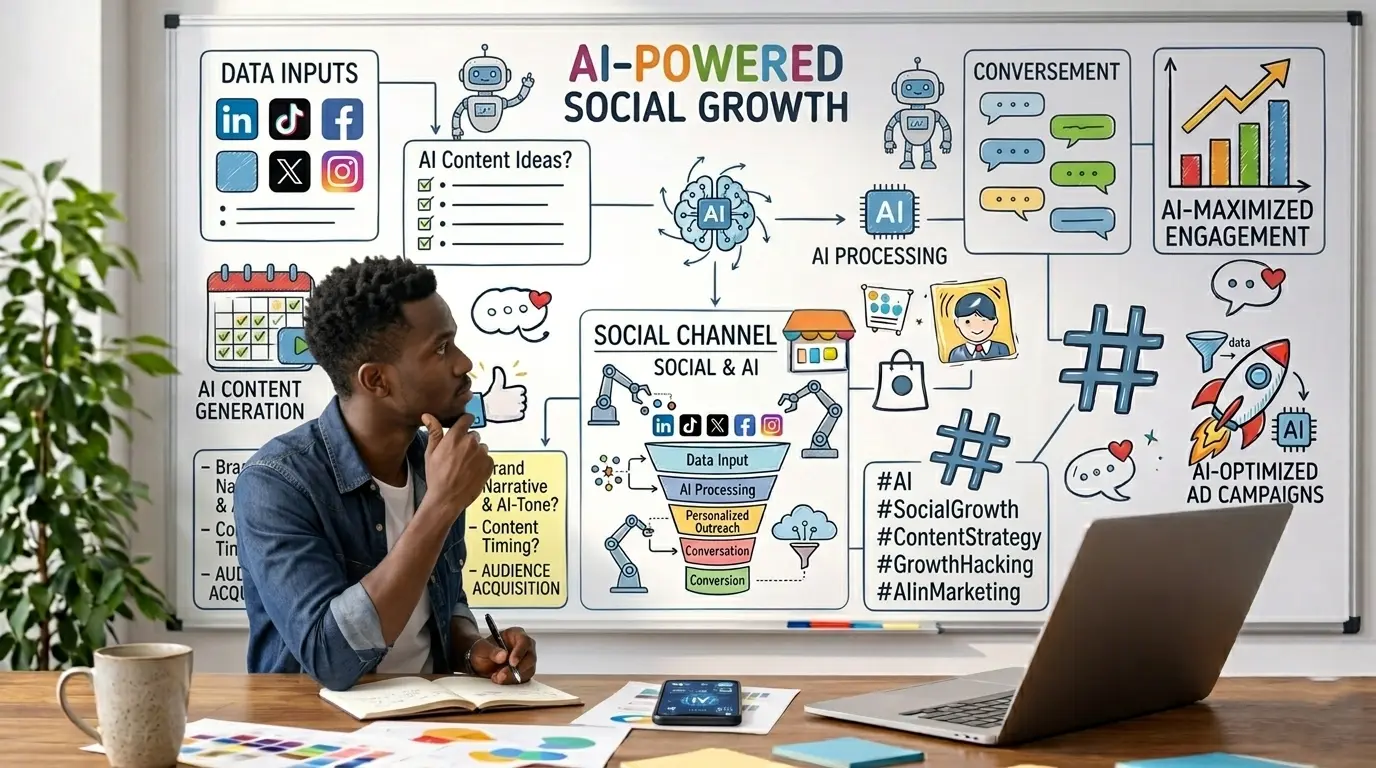
For businesses operating in Kenya and the East African region, the AI-driven transformation of digital marketing presents a unique set of opportunities. The region has one of the most mobile-first, digitally engaged populations in the world, with high adoption of platforms like WhatsApp, TikTok and Instagram. AI allows businesses to meet these consumers where they are, with content that speaks their language literally and culturally.
Small and medium-sized enterprises, which form the backbone of the East African economy, are the biggest beneficiaries. AI tools have dramatically lowered the barriers to entry for sophisticated marketing. A small fashion brand in Nairobi can now access the same level of audience targeting, personalization and analytics that was once reserved for multinational corporations with massive budgets. The playing field is leveling.
However, the pace of change also means that the gap between AI-adopting businesses and AI-ignoring businesses is widening rapidly. Companies that continue to rely on manual processes, generic content and traditional advertising are finding it increasingly difficult to compete. The cost of customer acquisition is rising for them, while AI-native competitors are seeing costs fall as their systems become more efficient with every campaign.
Conclusion
Artificial intelligence is no longer stems of an idea. It is the engine of modern marketing. From autonomous AI agents that execute complex campaigns, to personalized content delivered in real-time, to predictive analytics that anticipate customer behavior before it happens.
AI has fundamentally redefined playing field. This represents a historic opportunity to scale, personalize and optimize marketing efforts in ways that were unimaginable just a few years ago.
Considering how to add these advanced AI capabilities into your own marketing strategy? Explosify helps you grow your business, generate new leads and increase revenue through strategic solutions.
Book a free consultation with our marketing strategist here and get started