
Why Micro-Influencers Are Winning?
Brands are no longer solely chasing celebrities with millions of followers. Instead, they are turning their budgets toward everyday experts. These are the micro-influencers and they are winning the race for consumer trust.
For businesses in Kenya and East Africa, this trend is not just a facade; it is a strategic necessity. The local digital market forum values connection over vanity metrics, making micro-influencers the most sort after powerful asset for growth as of the time you are reading this.
Who Are Micro-Influencers?
Micro-influencers are social media creators who typically have between 1,000 and 100,000 followers. Unlike macro-influencers or celebrities, they operate within a specific niche. This niche could be anything from Nairobi street fashion to Kisumu tech gadgets or Ugandan organic farming.
These individuals are not distant idols; they are peers. They are the food bloggers in Kilimani, the fitness trainers in Mombasa or the tech reviewers in Kigali. Their audience is small enough to maintain personal relationships but large enough to drive sales. Micro-influencers are often seen as the "trusted neighbor" who happens to have a smartphone and a loyal following.
From Big Influencers to Micro-Influencers?
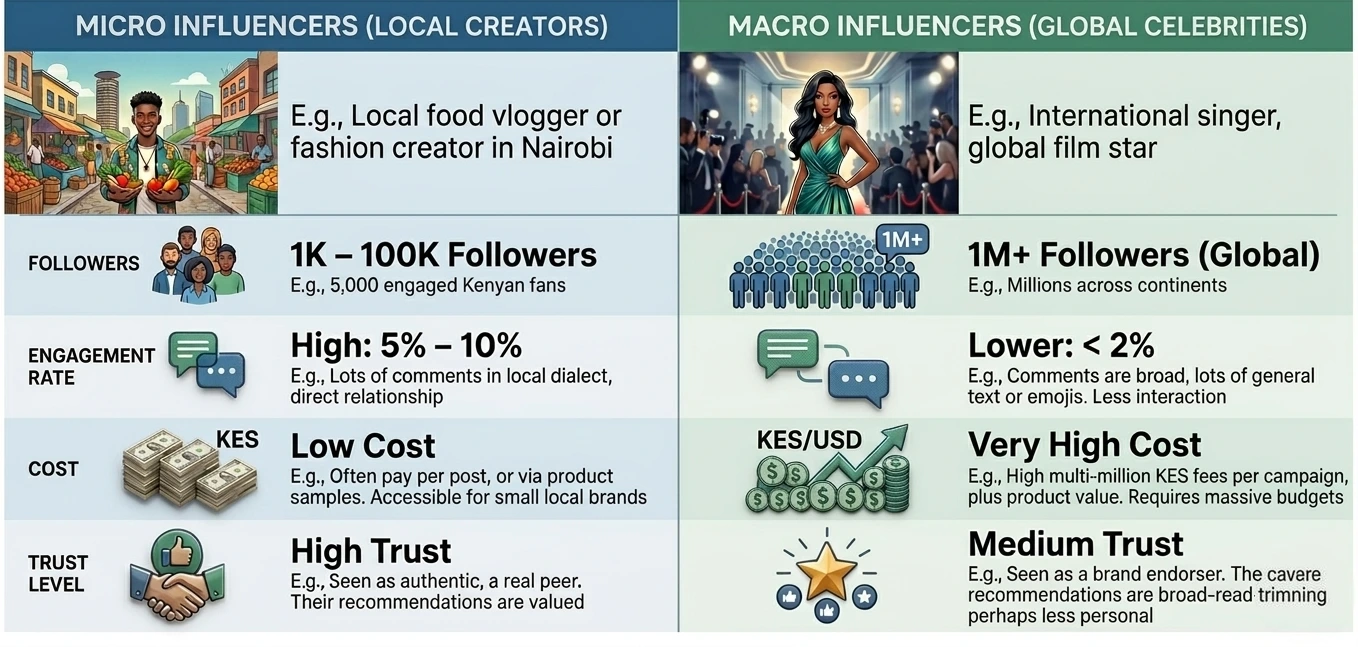
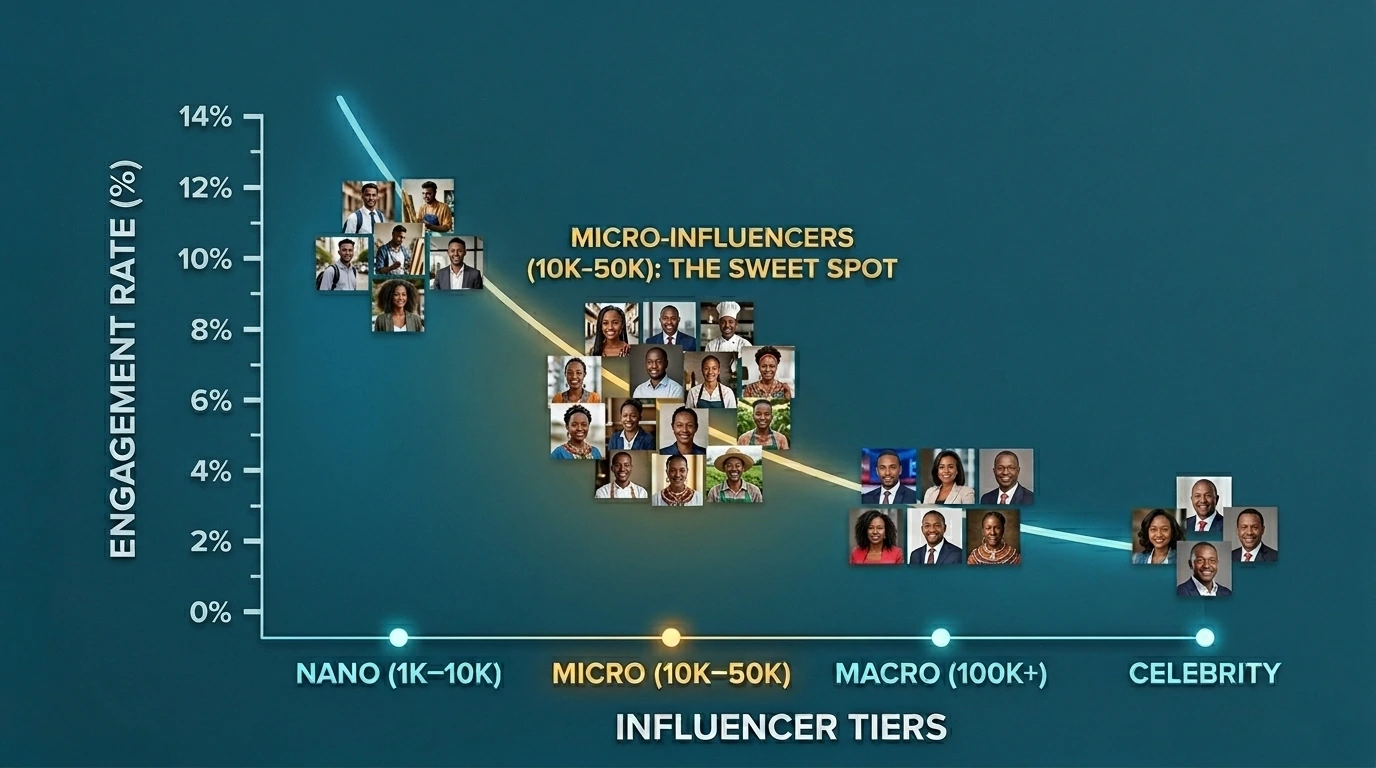
For years, brands chased the "blue tick" verification. They wanted the big names. However, data reveals that engagement rates drop drastically as follower counts rise. A macro-influencer might get likes, but a micro-influencer gets conversations.
Micro-influencers thrive because they solve the "trust deficit." In Kenya, where word-of-mouth (WOM) remains the king of purchasing decisions, a recommendation from a micro-influencer feels like advice from a friend. Their audiences know them personally. When they promote a product like a Sasa intercom or a KCB banking app it does not feel like an ad. It feels like a genuine tip.
What Are the Benefits of Micro-Influencers?
Integrating micro-influencers into your social media marketing strategy offers distinct advantages over traditional advertising. Below is a breakdown of the core benefits specifically relevant to the Kenyan and East African market.
| Benefit | Impact on Business in East Africa | Why It Works Locally |
|---|---|---|
| Higher Engagement Rates | Better ROI than celebrity endorsements | Followers reply, share and ask questions actively. |
| Cost Efficiency | Accessible to SMEs and startups | A micro-influencer charges less than a TV ad or a radio spot. |
| Niche Targeting | Reach specific tribes (e.g., Kikuyu comedians, Luo musicians) | You avoid wasting money on uninterested demographics. |
| Authentic Local Trust | Increased conversion rates for local products | The influencer lives the same economic reality as the buyer. |
Authenticity over Aesthetics
The primary benefit is authenticity. Micro-influencers create raw, unpolished content. They film in their actual kitchens, using their real M-Pesa statements or wearing the Kitenge fabric they just bought. This level of honesty is rare in polished celebrity ads. For a business in Nairobi, this means your product is seen in a real-life context, reducing the buyer's risk perception.
Cost-Effective Marketing for SMEs
Most Kenyan and East African businesses do not have the budget for a national celebrity like Diamond Platnumz or Lupita Nyong’o. Micro-influencers offer a solution. You can run a full campaign with ten micro-influencers for the price of one TV commercial. This allows for A/B testing of different messages across different tribes and regions without breaking the bank.
Niche Targeting in a Diverse Region
East Africa is not a monolith. A strategy that works in Dar es Salaam may fail in Kampala. Micro-influencers allow you to drill down into specific locations. You can find a micro-influencer for tech startups in Kigali or fashion in Burundi. This granular targeting ensures your digital marketing spend reaches only the most relevant eyes.
How Do Micro-Influencers Provide Efficient Solutions?
Micro-influencers are not just pretty faces; they are problem solvers. They provide efficient solutions to three major marketing headaches: low ROI, ad fatigue and poor conversion rates.
- Solving the "Ad Blocker" Problem
Consumers in Kenya are tired of intrusive banner ads. They use ad blockers or simply scroll past polished commercials. Micro-influencers bypass these defenses because their content lives inside "feeds" that look like organic posts. When a micro-influencer reviews a Safaricom Home Fibre package, it appears as a story, not a billboard. This solves the reach problem without paying for expensive ad platforms.
- Bridging the Language and Cultural Gap
East Africa is home to dozens of languages:- Swahili, Luo, Kikuyu, Luhya and Luganda, to name a few. A generic English ad will not resonate in a rural market. Micro-influencers speak the local Sheng (slang). They understand local humor, taboos and holidays. By utilizing micro-influencers, a brand can efficiently localize its message without hiring a full translation agency. They act as cultural translators who make global products feel local.
- Driving "Click-to-WhatsApp" Conversions
The customer journey often ends on WhatsApp or Instagram DM, not a website. Micro-influencers excel here. They use "link in bio" strategies or direct call-to-action (CTA) stories that drive traffic straight to a chat. They provide a soft introduction. Instead of a hard sell, they say, "DM me for a discount code." This solves the problem of low online shopping cart completion rates by humanizing the transaction.
How to Leverage Micro-Influencers for SEO and Reach
While micro-influencers live on social media, their impact on your SEO (Search Engine Optimization) is tangible. When they talk about your brand, they generate social signals. They also often link back to your website via blog posts or YouTube descriptions. For a business operating in Kenya, this builds a network of backlinks from local, authoritative sources.
User-Generated Content (UGC) Goldmine
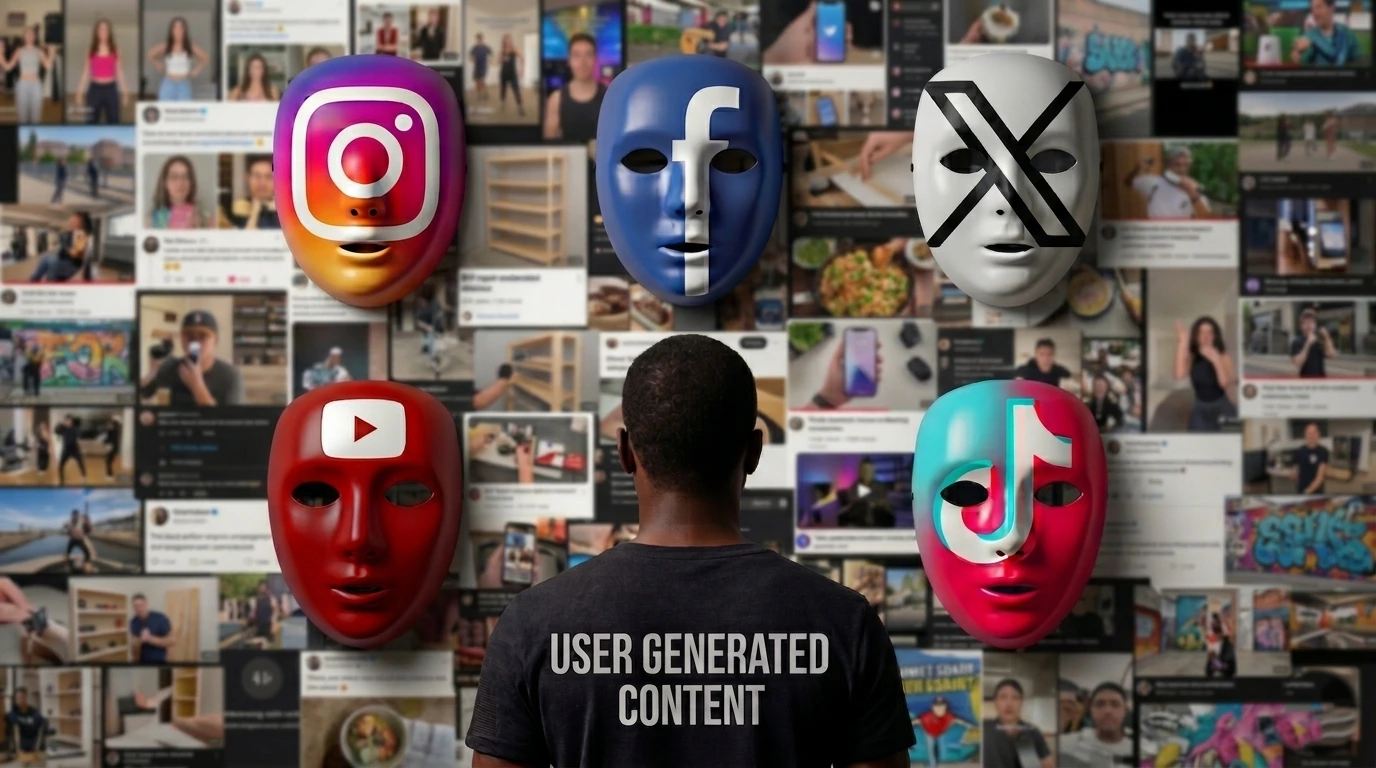
Every time a micro-influencer posts, they create User Generated Content (UGC). You have the legal right (via contract) to repost this content on your website. UGC increases time-on-site metrics, which tells Google your page is valuable. For example, if you sell coffee in Kisii, reposting a micro-influencer’s brewing tutorial onto your product page can boost your organic ranking for "best coffee in Kenya."
Long-Tail Keyword Domination
Micro-influencers speak conversationally. They use long-tail keywords naturally. While a celebrity might say "Buy this perfume," a micro-influencer says "The best swag perfume for a hot day in Mombasa road traffic." This specific language aligns perfectly with voice search queries. By monitoring their content, you can extract these phrases to optimize your own H2 and H3 tags.
| Strategy | Micro-Influencer Action | SEO Outcome |
|---|---|---|
| Local Link Building | Mentioning your URL in a bio or YouTube caption | High Domain Authority (DA) backlinks from local IPs. |
| Social Proof | Posting unboxing videos with your brand name | Increased branded search volume on Google. |
| Event Geotagging | Tagging your store location in Nairobi CBD | Improved local SEO for "near me" searches. |
The East African Blueprint Campaign
To win with micro-influencers, you need a strategy, not just a budget. Follow this blueprint for the East African market.
Step 1: Identify the Right Voices
Do not look for the most followers. Look for the most relevance. Use social listening tools or simply search hashtags like #KenyanFashion, #TanzaniaEats or #UgandaTech. Look for accounts where the comment section is active. If the influencer replies to comments, they are gold.
Step 2: The "Product + Experience" Exchange
Micro-influencers value experiences over cash, though payment is necessary. Offer them an exclusive experience. Invite them to your factory in Industrial Area or a tasting at your cafe in Westlands. When they see the backend of your business, their storytelling becomes richer and more detailed.
Step 3: Long-Term Ambassadors, Not One-Off Ads
The winning strategy is repetition. Do not use a micro-influencer once. Sign them for three months. This frequency builds familiarity. When an influencer uses your logistics service in Kenya ten times, their audience starts to associate that influencer with your brand. This is called "brand association," and it is more powerful than a single viral post.
Step 4: Track Unique Codes and Links
Always provide a unique discount code (e.g., "INFLUENCER10") or a custom landing page. This allows you to measure exactly which micro-influencer drives sales. In digital marketing, what gets measured gets managed. You will quickly see which tribe (Kikuyu, Luhya or Luo following) converts best for your specific product.
Why Traditional Advertising Fails Where Micro-Influencers Win
Traditional billboards, radio jingles and TV ads are "one-way streets." They shout. The consumer listens and forgets. Micro-influencers utilize the "two-way street" of social media. A user asks a question about the product; the influencer answers within minutes.
This interactivity is crucial for complex products. If you are selling insurance or banking apps, a celebrity cannot explain the terms and conditions. A micro-influencer can host a live Instagram Q&A session. They can screen-share the M-Pesa app integration. This educational component reduces customer service inquiries later. It pre-sells the customer so thoroughly that when they reach your website, they are ready to buy.
Data Point: Engagement Rates
Data consistently shows that as follower count exceeds 100k, engagement rates drop below 2%. For micro-influencers (10k-50k followers), the average engagement rate hovers around 5% to 10%. For a business in East Africa, this means your ad is seen and interacted with by a percentage of the audience, not just a fraction. Ten thousand engaged followers are worth more than one million bot-filled accounts.
Overcoming Challenges in the Kenyan Market
It is not all perfect. Managing multiple micro-influencers requires organization. You need a CRM or a spreadsheet to track deadlines. However, the solution is simple: standardization. Provide a media kit. Provide a brief with bullet points (e.g., "Mention the delivery time" or "Show the unboxing"). By treating them as professional partners, you mitigate the risk of unprofessional behavior.
Another challenge is payment logistics. Some micro-influencers prefer M-Pesa; others want bank transfers. The efficient solution is to have a flexible finance team. Pay promptly. In Kenya, paying an influencer late will damage your reputation faster than a bad product. Respect their time and they will respect your brand.
Micro-Communities and Nano-Influencers
Nano-influencers (1k to 10k followers) are the next frontier. These individuals are pure friends to their audience. In East Africa, where trust is the primary currency, nano-influencers offer the highest conversion rates. We predict that by 2026, most successful digital marketing campaigns in Nairobi, Dar es Salaam and Addis Ababa will consist of 70% micro/nano creators and 30% paid ads.
Conclusion
Micro-influencers are winning because they humanize your brand. They replace the loudspeaker with a conversation. They also offer a cost-effective, authentic and highly engaging path to market. They provide the efficient solution to the modern problem of ad blindness. By utilizing niche voices, you stop shouting into the void and start speaking directly to buyers who are ready to listen.
However, managing a full-scale micro-influencer campaign requires expertise. You need to vet the influencers, track the contracts, analyze the engagement data and scale the winners. Doing this in-house can drain your resources.
Ready to stop losing money on ads that don't convert?
Let Explosify handle the process. We connect your brand with the voices that matter, manage the campaigns and deliver the data you need to grow.
Book a free consultation with our marketing strategist here and get started.